This could've been a great entry point into the world of psychedelic medicine—but I wasn't the right audience. I went in hoping for updates on the science, new insights, or even some bold thinking. What I got felt flat and obvious. If you've been casually following developments in this field for a while, there's nothing new here.
The book covers the therapeutic potential of psychedelics for treating depression, addiction, PTSD, and end-of-life anxiety. Pollan traces the history from LSD's discovery through Timothy Leary's excesses to the current clinical revival. The neuroscience concept that anchors the book is the "default mode network"—the brain region associated with ego and self-referential thought—and how psychedelics quiet it, producing experiences of ego dissolution.
Critics on Goodreads (4.27 stars, 84K ratings) are enthusiastic. Common praise: accessible writing, balanced perspective, personal courage in sharing his own experiences. Common criticism: repetitive trip descriptions, heavy Timothy Leary focus despite disclaiming it, and advocacy bias rather than objective analysis. One reviewer nailed it: "4 parts good info and 1 part crackpot."
I've kept an eye on psychedelic research for the past decade, so maybe it's unfair to expect something groundbreaking. Still, I was bored, skipping around, and eventually quit the book early. The writing felt overly cautious and safe—like it was designed to be as palatable as possible to a mainstream audience.
Because of that, I probably won't read anything else by Michael Pollan. His voice didn't click for me—too vanilla, too polished. But if you're new to the topic and want a modern overview from a credible mainstream source, this might be the perfect introduction.
For adjacent reading: *Moonwalking with Einstein* explores memory and mind from a different angle, while *Breath* by James Nestor covers another underexplored frontier of human physiology.
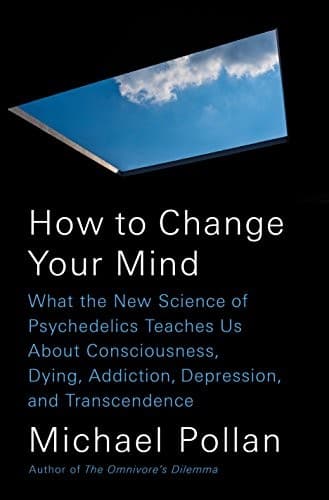
How to Change Your Mind
by Michael Pollan
- Published
- May 1, 2023
- Reading Time
- 1 min