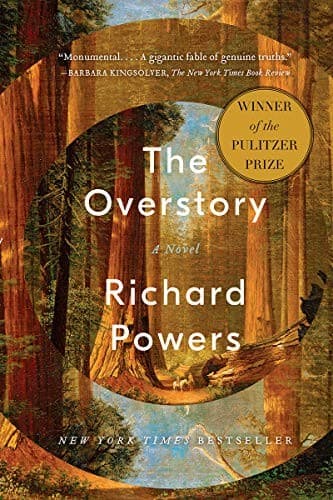
*The Overstory* is an epic ode to trees. The structure mirrors arboreal growth: **Roots** introduces eight separate characters and their unique relationships with trees. Then comes **Trunk**—a massive section where all their stories merge. **Crown** follows with the climax, and finally **Seeds**, the aftermath.
The structure is monolithic—you get the sense that the characters you haven't heard from in hours are still out there, waiting to reenter the story. Powers won the Pulitzer Prize for this, and you can feel the ambition on every page.
The central argument, delivered through narrative rather than polemic: trees are beings on a timescale we can't comprehend. They communicate, cooperate, remember. We're destroying something we don't understand.
Goodreads (4.11 stars, 194K ratings) is divided. Praise: "first section ('Roots') is stunning," "beautiful prose," "made me see trees differently." Criticism: "characters underdeveloped compared to tree focus," "preachy without viable solutions," "the middle sections drag." As one reviewer put it: "overwritten and tedious." Both perspectives are valid—this book demands patience.
Set mostly across the late 20th century, the book carries an existential tension around the environment that *Ministry for the Future* picks up and runs with into the 21st century. I honestly consider *The Overstory* a thematic prequel—the characters and plots are different, but the emotional and ecological groundwork is all laid here.
For the continuation of these themes into climate policy fiction, read *Ministry for the Future* next. For nonfiction on trees, try Peter Wohlleben's *The Hidden Life of Trees*.
The Overstory
by Richard Powers
- Published
- September 1, 2023
- Reading Time
- 1 min