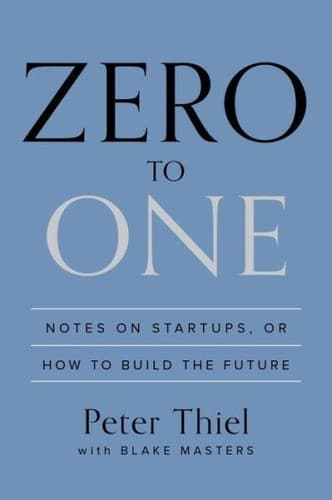
This is essentially Peter Thiel's Stanford lecture notes, organized by Blake Masters into a short, opinionated manifesto on startups. The core thesis: the best companies don't compete—they create monopolies by building something entirely new (going from "zero to one") rather than copying what exists (going from "one to n").
"Competition is for losers" is the most memorable line, and Thiel means it literally. He argues that perfect competition destroys profits and that the most successful companies—Google, Facebook, PayPal—won by creating categories, not by outcompeting in existing ones. The contrarian interview question—"What important truth do very few people agree with you on?"—has become a Silicon Valley cliché, but it's a genuinely useful filter for thinking about innovation.
The book is best when it's philosophical. Thiel's distinction between definite optimism (building a specific future) and indefinite optimism (assuming things will get better without a plan) is sharp. His critique of lean startup methodology—that iterating toward product-market fit can become an excuse for not thinking—is underappreciated.
Where it's weakest: Thiel's worldview is narrow. The examples skew heavily toward tech monopolies, and the advice applies more to venture-backed startups than to most businesses. The book also has a survivorship bias problem—it's easy to say "build a monopoly" when you're already a billionaire.
At 224 pages, it's mercifully short. Read it for the frameworks, not the prescriptions. For the opposing view on how elites justify their position, pair with Giridharadas's *Winners Take All*. For the crypto-native extension of Thiel's ideas about decentralization, try *The Sovereign Individual*.