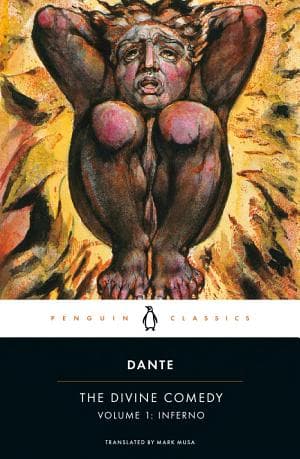
The Divine Comedy stands as one of the most influential works in Western literature, taking readers on an epic journey through the afterlife: from the nine circles of Hell (Inferno), up the mountain of Purgatory (Purgatorio), and finally to Paradise (Paradiso). Written in the early 14th century, Dante's masterpiece blends theology, philosophy, politics, and personal experience into a cohesive vision of the medieval worldview.
Let's be honest about how the three parts land:
Inferno is the masterpiece. The imagery is visceral and unforgettable. The concept of contrapasso—each sinner's punishment mirroring their sin—is poetic justice made literal. Fortune-tellers walk with their heads twisted backward, unable to see ahead. Flatterers wade through excrement. Traitors are frozen in ice, gnawed eternally by Satan himself. The famous inscription above Hell's gate sets the tone:
"Abandon all hope, ye who enter here."
Purgatorio loses momentum. Critics often call it the weakest section, and I agree. The mountain-climbing structure is clever, but the drama is muted. Souls are being cleansed, not punished—less visceral, less memorable.
Paradiso is theologically dense and hard to love. Many readers—historically and today—abandon the Comedy during this section. Heaven lacks dramatic tension. The light gets brighter, the theology gets denser, and the modern reader drifts. But the final line remains one of the most beautiful in literature:
"The love that moves the sun and the other stars."
The Virgil-Dante dynamic carries the first two books. Virgil as guide, mentor, and stand-in for human reason—able to navigate Hell and Purgatory but unable to enter Paradise. It's a compelling relationship, and losing Virgil at the gates of Heaven is genuinely affecting.
Translation matters enormously. The Mandelbaum version is widely praised; Clive James's quatrain-based translation has poetic energy. Pick one that works for you.
For epic scope, pair with The Iliad—different tradition, same foundational status. For something more accessible with similar cyclical-time themes, try One Hundred Years of Solitude.