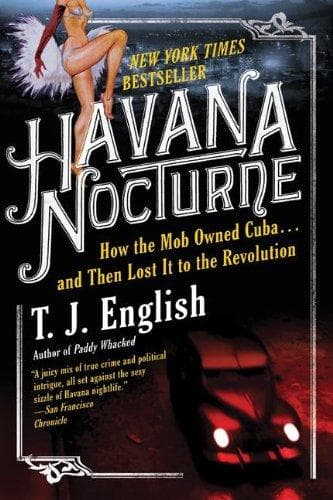
English reconstructs how the American Mafia built a gambling empire in pre-revolution Cuba, with Meyer Lansky as the architect and Batista as the willing partner. Havana in the 1950s was the mob's paradise—casinos, hotels, nightclubs, all operating with government protection in exchange for a cut. Then Castro arrived and burned it all down.
The book reads like a noir thriller. English captures the texture of 1950s Havana—the music, the glamour, the violence underneath. Lansky emerges as the most fascinating figure: quiet, methodical, and genuinely business-minded in a world of thugs. His vision was to make organized crime legitimate through Cuban casinos—a dry run for what eventually happened in Las Vegas.
The political dimension is what elevates this above a standard mob story. The U.S. government's complicity—turning a blind eye to the mob's operations because Batista was anti-communist—is a recurring theme. When Castro's revolution swept through, the mob lost everything overnight. The irony is thick: the same American foreign policy that enabled the mob also created the conditions for the revolution that destroyed it.
The weakness is that the book sometimes gets lost in the details of mob hierarchies and business dealings. Not every casino transaction needs a full chapter. And the Castro sections feel compressed compared to the lavish attention given to the mob's golden years.
For another story of how organized money and political power intertwine, The Medici covers similar dynamics in Renaissance Florence. For the financial engineering side of empire, try The Ascent of Money.