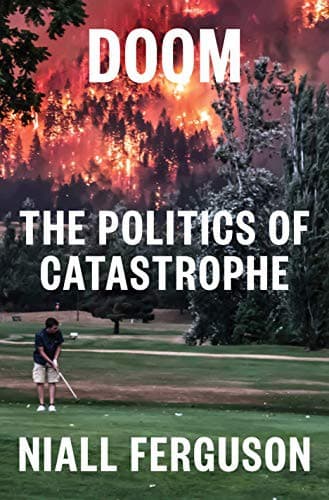
I wanted to love this book. The title is strong, the author has a witty mind and track record, but the execution didn't land. Doom promises a sweeping look at how societies handle catastrophe—but what we mostly get is an extended COVID-19 postmortem, recycled across chapters.
Ferguson's core insights are solid: the difficulty of predicting "black swan" events, the influence of social networks on disease spread, and crucially, the failure of mid-level management to prevent crisis escalation. That last point is underrated—disasters often become catastrophes not at the top or bottom but in the middle layers of institutions.
Goodreads (3.62 stars, 1,270 ratings) reflects the disappointment. Critics call it a "hastily-thrown together mess" that forces COVID into a pre-existing frame. "Fascinating at times, boring at others." "Better for references than analysis." It was shortlisted for the Lionel Gelber Prize, so someone liked it.
The book aims to explore the politics of disaster management across history, but ends up feeling repetitive and narrow in scope. Many of Ferguson's points are good—especially around institutional failure and risk mismanagement—but they're hammered so often that they lose impact. I found myself disengaged well before the halfway mark.
Maybe it's burnout. Maybe it's the timing. But for a book about catastrophe, it doesn't offer much that feels fresh or enduring. There are glimmers of classic Ferguson—sharp insights, historical sweeps—but they're buried under pandemic-era analysis that already feels overplayed. I had just lived through it and generally, it sucked.
For better macro-historical frameworks, try Guns, Germs, and Steel or the Zeihan books.