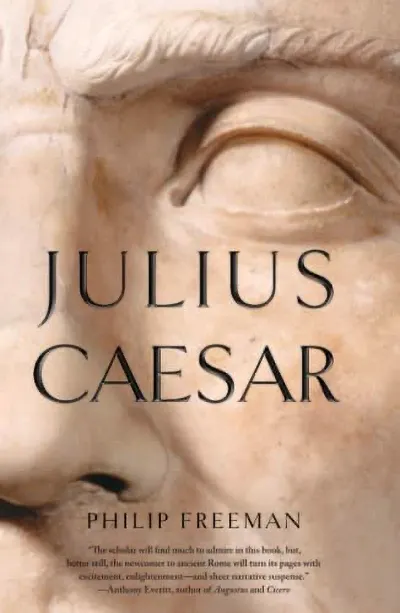
Freeman's biography stands out for what it doesn't do: it doesn't reduce Caesar to a military leader, and it doesn't bury you in academic hedging. The result is a portrait of relentless ambition matched by genuine talent.
Caesar was a military genius, yes—the conquest of Gaul is staggering in scope—but he was also one of the great prose stylists of Latin literature, a gifted orator who could sway crowds and senators alike, and a political operator who outmaneuvered everyone until the knives came out.
The book tracks his rise from young aristocrat in a Rome that had already descended into civil strife, through his decade-long conquest of Gaul, to his crossing of the Rubicon and seizure of power. Freeman doesn't flinch from Caesar's brutality (the Gallic Wars killed perhaps a million people) but also doesn't reduce him to a simple villain. The complexity is the point.
What makes this biography work is the pacing. At 416 pages, it's comprehensive without being exhausting. Freeman writes for general readers, not just classicists, but doesn't condescend.
For those who want to go deeper: Adrian Goldsworthy's Caesar: Life of a Colossus offers more military detail. Tom Holland's Rubicon provides broader context on the Republic's collapse. For the philosophical legacy of Roman leadership, try Marcus Aurelius's Meditations.