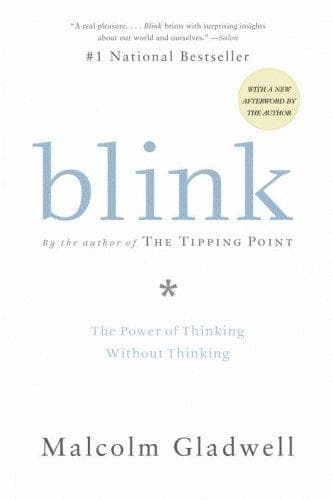
Gladwell explores "thin-slicing"—the ability to make accurate judgments from very limited information in milliseconds. An art expert glances at a statue and knows it's a forgery before any lab test confirms it. A marriage researcher watches a couple argue for fifteen minutes and predicts divorce with 90% accuracy. The unconscious mind, Gladwell argues, is often smarter than the conscious one.
The first half is compelling. The examples are well-chosen and the research is genuinely surprising. The Implicit Association Test chapter—showing how our unconscious biases contradict our stated beliefs—remains relevant and uncomfortable. We like to think we're rational agents making deliberate choices. We're not.
But Gladwell wants it both ways. Sometimes snap judgments are brilliant (the art expert). Sometimes they're catastrophically wrong (the police shooting of Amadou Diallo). The book never fully resolves when to trust your gut and when to override it, which is the only question that actually matters. Instead, Gladwell falls back on storytelling—entertaining but inconclusive.
The writing is pure Gladwell: breezy, anecdotal, structured around surprising reversals. If you enjoy his style, this delivers. If you find him frustrating—all setup, no framework—this won't convert you.
For the deeper science of unconscious decision-making, Subliminal by Mlodinow covers similar territory with more rigor. For Gladwell's better book on how context shapes success, read Outliers. And for the philosophical implications of snap perception, Harding's On Having No Head takes the idea to its strangest extreme.