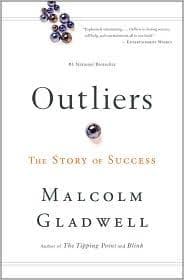
Gladwell's central argument is that success isn't primarily about talent—it's about timing, culture, accumulated advantage, and sheer hours of practice. The famous "10,000-hour rule" comes from this book, and while it's been widely misquoted and oversimplified (including by Gladwell himself), the underlying insight holds: mastery requires sustained, deliberate effort over years.
The strongest chapters examine how structural advantages compound. Canadian hockey players born in January dominate because age cutoffs give them a physical edge at youth levels, which leads to better coaching, which leads to more ice time. Bill Gates got access to a computer terminal in 1968—when almost nobody had one. The Beatles played eight-hour sets in Hamburg for years before anyone cared. None of these people lacked talent, but talent alone doesn't explain the outcome.
The weaker chapters stretch the thesis too far. The section on why Asian students excel at math (rice paddies require patient, detail-oriented labor, therefore...) feels like a just-so story. Gladwell's signature move—taking a surprising anecdote and extrapolating a universal principle—works when the evidence is strong and wobbles when it isn't.
Still, Outliers succeeds at its core mission: making you question the myth of the self-made genius. Success is always a collaboration between individual effort and circumstance.
For the counterpoint on how randomness shapes outcomes even more than Gladwell admits, read Taleb's Fooled by Randomness. For Gladwell's earlier work on snap judgments and intuition, try Blink.