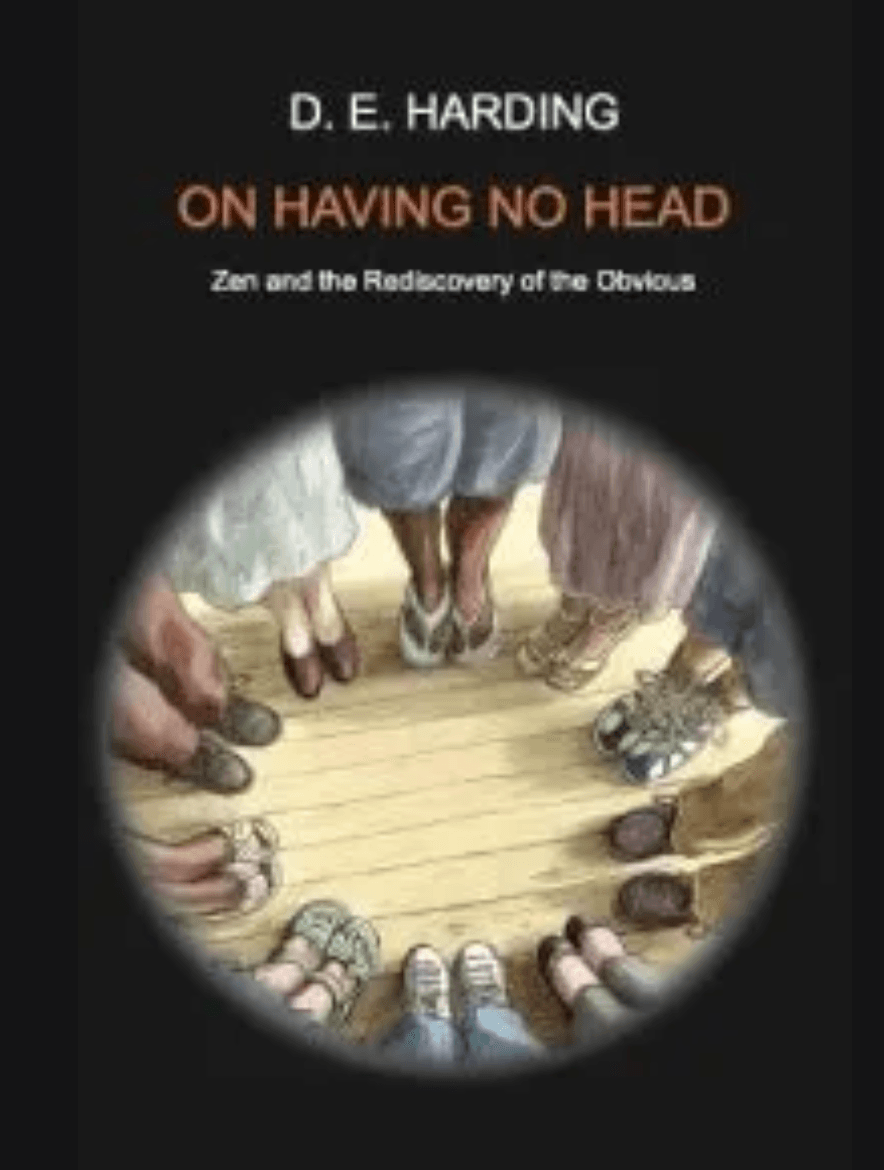
This is one of the strangest books I've read, and one of the most effective. Harding's central experiment is deceptively simple: point at where your head should be. What do you actually see there? Not a head—you see the world. Your visual field doesn't contain a face; it contains everything except a face. Harding argues that this isn't just an optical trick—it's a genuine insight into the nature of awareness.
The book is short (160 pages) and written with a directness that borders on naivety. Harding isn't making a philosophical argument so much as pointing at an experience and asking you to notice it. If you actually do the exercises—and they take seconds, not hours—something shifts. You notice that your first-person experience has always been headless, faceless, boundless. You just never paid attention.
Whether this constitutes "enlightenment" or just an interesting perceptual trick depends on your philosophical commitments. Harding clearly thinks it's the former. Sam Harris, who popularized Harding's work through his Waking Up app, treats it as a secular mindfulness technique. Either way, the experience is genuinely disorienting in a useful way.
The weakness is that the book is repetitive and occasionally reads like a spiritual pamphlet. Harding makes his point early and then restates it from multiple angles. Some readers will find this meditative; others will find it thin.
For the scientific investigation of how consciousness creates a self-model, read Hofstadter's I Am a Strange Loop. For the ancient practice tradition behind present-moment awareness, try Meditations by Marcus Aurelius. For Tolle's more accessible (if less rigorous) take on similar territory, there's The Power of Now.