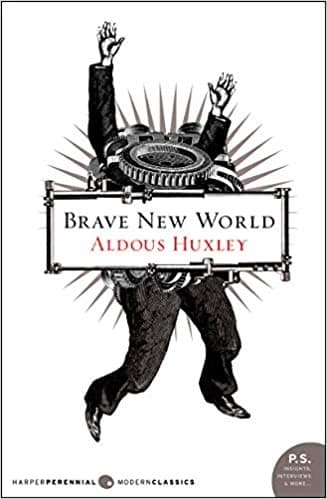
This is one of the few books I've read multiple times—and each time it hits differently. The first was in high school (barely finished it), then again in college when I realized just how ahead of his time Huxley was. Reading it now for a third time, it's clear: this book is timeless.
Published in 1931, it still reads like a warning. A lot of it may seem familiar now—not because it's outdated, but because everyone has copied it since. Huxley didn't just predict technology or authoritarianism—he nailed the way comfort and distraction can erode meaning.
The central insight is devastating: Orwell feared those who would ban books; Huxley feared no one would want to read them. In his world, control comes not through pain but through pleasure—soma holidays, feelies, endless distraction. As John the Savage cries out in the novel's climactic debate:
"But I don't want comfort. I want God, I want poetry, I want real danger, I want freedom, I want goodness. I want sin."
That confrontation between John and World Controller Mustapha Mond is one of the great debates in literature. Mond knows exactly what he's doing—he's read Shakespeare, he understands what's been sacrificed—and he defends it anyway. The horror isn't ignorance; it's informed consent to meaninglessness.
Some critics find the middle section tedious, the characters flat. They're not wrong—but they're missing the point. Huxley isn't writing a character study; he's constructing an argument. The flatness of Bernard and Lenina is the critique.
If you've never read it, fix that. If you've read it before, it might be time for a re-read. And when you're done, I highly recommend sailing on to Island—Huxley's lesser-known utopian counterpoint, written 30 years later. Where Brave New World asks "what if we got everything wrong?", Island asks "what if we got everything right?" Reading them together reveals the full arc of Huxley's thinking.
For the dystopia comparison: pair this with Orwell's 1984 (control through surveillance) and Bradbury's Fahrenheit 451 (control through censorship). Each offers a different mechanism of tyranny—and Huxley's feels most prophetic today.