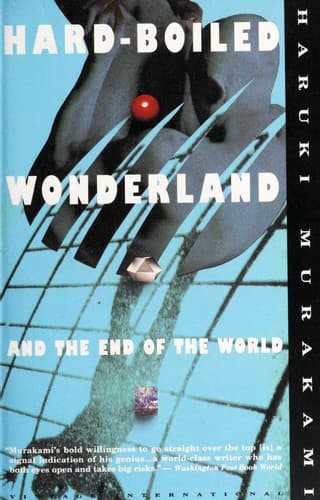
This book is a masterpiece. I read it in 2019 and have been recommending it ever since. Technically, I didn't read it this year—but it's too good not to include.
Murakami is a genius, and this is his best work. It's a surrealist novel that blends cyberpunk with fantasy, told through two alternating narratives. One takes place in a gritty, dystopian Tokyo where the narrator is a "Calcutec"—a human data processor working for a shadowy organization. The other unfolds in a strange, walled-off dreamworld where a "Dreamreader" lives among unicorns and shadows. The contrast is stark—and intentional.
"Unclose your mind. You are not a prisoner. You are a bird in flight, searching the skies."
"Only where there is disillusionment and depression does happiness arise."
As the two stories unfold, they slowly begin to intertwine. The convergence is mind-bending. Themes like consciousness, memory, identity, and selfhood are explored through both plots in deeply philosophical ways. The protagonist plays two roles, each dealing with reality in their own fractured way.
What makes this novel unforgettable is how those two worlds reflect inner experience—conflict, escapism, fragmentation of self. The writing is atmospheric and precise. It lingers. Murakami's use of imagery and metaphor hits hard in places you don't expect.
Critics on Goodreads (4.11 stars, 151K ratings) note some frustrations: "dense, occasionally confusing narrative," "unresolved plot threads," "dated gender representations." They're not wrong. But the confusion is the point. The ending doesn't resolve cleanly because identity itself doesn't resolve cleanly.
If you're looking for a one-of-a-kind, thought-provoking read, I can't recommend this book enough. It challenges your perception of identity, memory, and what it means to be whole.
For similar dreamlike narratives, try Kafka's Metamorphosis (shorter, bleaker) or García Márquez's One Hundred Years of Solitude (magical realism, different tradition). For another Murakami entry point, Kafka on the Shore covers similar ground.