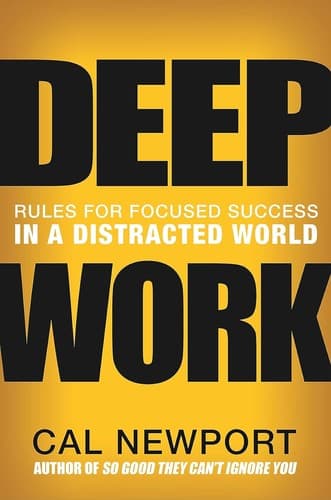
This book is essentially a long lecture on how to be more productive by using less technology. Newport's thesis is simple: multitasking and constant digital distractions are killing our ability to do meaningful work. The antidote? Focus—deep, uninterrupted focus.
A lot of this resonates. When I think about the attention span people had 100 years ago compared to now, it's almost laughable. The research backs Newport up: having a smartphone nearby makes you measurably dumber because your brain allocates resources to resisting the temptation. TikTok-style rapid context-switching damages memory formation. People doomscroll for two hours and can't tell you what they just watched.
Newport's practical framework:
| Rule | Description |
|---|---|
| Work Deeply | Structure your schedule around deep work blocks |
| Embrace Boredom | Train your brain to resist distractions |
| Quit Social Media | Minimize low-value digital activities |
| Drain the Shallows | Reduce shallow work commitments |
His research-backed insights are useful: limit deep work to ~4 hours daily (more isn't sustainable), establish shutdown rituals, use "productive meditation" during physical activities. Goodreads (4.16 stars, 187K ratings) reflects broad enthusiasm.
But critics aren't wrong: the book is repetitive, relies heavily on examples of successful white male professionals, and may be impractical for managers requiring constant communication. If you're already aware that tech can be a distraction, this mostly reinforces what you know—just better packaged and persistently argued.
Newport's ideas are solid, but most fall under the umbrella of "common sense." The value is in the systematic articulation and the permission structure it provides to protect your attention.
For the philosophical counterpoint, read Four Thousand Weeks—Burkeman argues you should accept finite attention rather than optimize it. For the ancient parallel, Meditations covers similar themes of mental discipline from a Roman emperor's perspective.