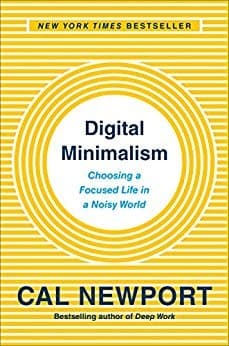
This is Newport's better book—more practical and less self-congratulatory than Deep Work. The thesis: we didn't choose our digital habits. Tech companies designed their products to be addictive, and we adopted them without thinking. Digital minimalism means starting from scratch—clearing everything out and deliberately choosing what to add back.
Newport's "digital declutter" protocol is the book's most actionable idea: take 30 days off all optional technology, then reintroduce only the tools that serve something you deeply value. It sounds extreme, but the point isn't permanent abstinence—it's breaking the default of mindless consumption so you can make intentional choices.
The concept of "solitude deprivation" is underappreciated. Newport argues that for the first time in human history, it's possible to eliminate every moment of solitude from your life—always a podcast, always a scroll, always a notification. This isn't just unpleasant; it may be genuinely damaging to our ability to think, process emotions, and maintain mental health.
The weakness is that Newport sometimes writes as if he's above the problems he describes. He famously doesn't use social media, which makes his advice feel easier to give than to take for people whose careers depend on it. The book also skews toward privileged knowledge workers—there's little acknowledgment of people who use their phones because they're exhausted, lonely, or don't have better options.
For the tactical focus techniques that pair with this philosophy, read Newport's own Deep Work. For the philosophical case that we should accept our limits rather than optimize around them, try Four Thousand Weeks.