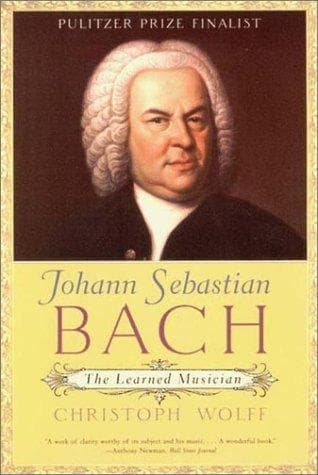
Wolff's biography is the definitive scholarly treatment of Bach, reconstructing a life from surprisingly sparse records. Bach left almost no personal correspondence—no letters about his creative process, no journals, no memoirs. What survives are church records, employment contracts, legal disputes, and the music itself. Wolff builds a remarkably detailed portrait from these fragments.
The most surprising revelation is how practical Bach's life was. He wasn't a tortured genius composing in solitude—he was a working musician with a demanding job, producing cantatas on a weekly schedule for church services while teaching, performing, managing musicians, and navigating institutional politics. The output is staggering: over 1,100 compositions, many created under deadline pressure that would break a modern creative.
Wolff argues that Bach saw himself as a "learned musician"—someone who systematically explored the mathematical and structural possibilities of music. Each fugue, each cantata, each chorale was both a devotional act and an intellectual exercise. The music was prayer and puzzle simultaneously.
The book is dense (599 pages) and assumes some familiarity with music theory. Wolff's prose is academic rather than narrative, which makes the book rewarding for serious readers but demanding for casual ones. The biographical sections sometimes read like annotated timelines. If you want the story told with more color, other biographies are more accessible.
For another deep dive into a musician's world and philosophy, try Keith Jarrett by Ian Carr. For the broader history of classical music that Bach's legacy feeds into, Ross's The Rest Is Noise picks up where Bach's era ends.