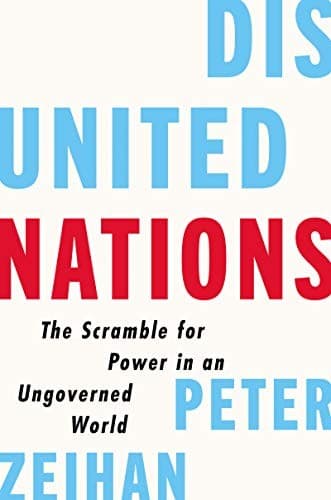
In this prescient analysis, Zeihan examines how the unraveling of the American-led global order will affect different nations. His framework evaluates countries based on demographics, geography, energy security, and food production capacity—factors that become crucial in a deglobalizing world.
The book's country-by-country analysis is the main draw. Zeihan argues that some nations (like France and Turkey) are well-positioned for a more fragmented world, while others (like China and Germany) face significant challenges. His assessment of how demographic decline, energy dependencies, and food security issues will reshape international relations feels increasingly relevant.
Goodreads (4.20 stars, 2,300 ratings) is enthusiastic but divided. Praise: "typically engaging and provocative and snarky," "very entertaining... feels like discussing with a friend at a bar," "remarkable attempt to summarize every major nation's future." Criticism: "same cause, without distinction, as explanation for disparate outcomes," "arrogant, narcissistic and America-centric," and fairly: "predicting long-term geopolitical trends 30 years out introduces wide error bars."
The critique about using the same framework everywhere is valid. Everything reduces to geography + demographics + energy + food. It's powerful but risks becoming a hammer that sees every problem as a nail.
Most provocative is his assertion that the coming decades will see the end of China's rise, Russia's decline into irrelevance, and the emergence of unexpected regional powers. While some predictions seem extreme, events since publication have validated many of his core arguments about the fragility of global supply chains and international cooperation.
This is the third book in the Zeihan series. Read Accidental Superpower first, then Absent Superpower, then this for the country-by-country breakdown.