All writing
Derivatives vs Spot
finance
When the side bets move the main game
By Zachary Roth•2 min readMarch 2, 2022
For every $1 in stock markets, $11 in derivatives are betting on what that dollar does.
A conservative estimate puts global derivatives at one quadrillion dollars. These aren't just hedges—they're side bets, bets on side bets, and bets on bets on side bets. The sheer quantity of side bets changes how the main game plays out.
A Case Study
The S&P 500 futures movement in early 2022:
- Large traders (reportedly including Carl Icahn) accumulated massive positions in 4050 puts
- The market declined to precisely 4050 by expiration
- These traders then established new positions in 3950 puts
- The market dropped again
Coincidence? Maybe. But the mechanics of dealer hedging combined with market psychology can make large derivative positions self-fulfilling.
Market Structure
Market structure encompasses everything that affects how prices form: number and size of buyers/sellers, competition level, information availability, regulatory environment, and trading infrastructure.
Gamma Squeezes
During COVID, "gamma squeeze" became a CNBC buzzword. Here's what it means:
- You buy call options (betting on upside)
- A dealer sells you those options (taking the other side)
- The dealer hedges by buying the underlying asset
- More call buying → more dealer hedging → more buying pressure
- Price rises exponentially
GameStop and AMC demonstrated this in extreme form. The derivatives drove the spot price, not the other way around.
The 1987 Lesson
Why do dealers have so much influence? Because after 1987, they're legally required to.
The 1987 crash wasn't caused by bad earnings or geopolitical events. It was a structural failure: an overcrowded trade in portfolio insurance triggered selling that triggered more selling. On that October morning, no one was willing to bid.
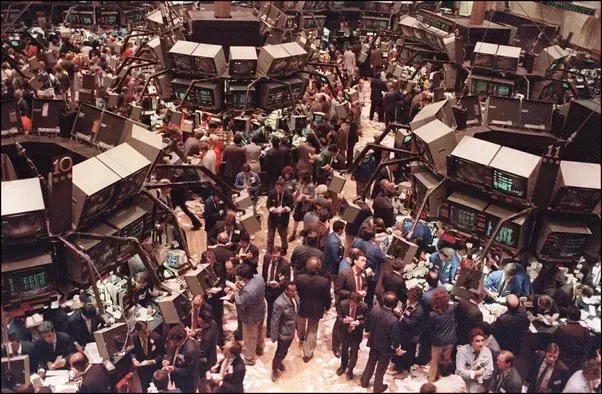
The market dropped 22% in a single day—not because anything fundamental changed, but because the market's structure broke. Regulators decided this was unacceptable. Now market makers must provide liquidity.
Paul Tudor Jones made a fortune being on the right side of that crash. The market then went up almost continuously until the tech bubble burst in 2000.
The backstop has failed twice since: 2008 and 2020. In both cases, conditions got so dire that even obligated market makers couldn't absorb the selling—until central banks made their intentions clear.
Reflexivity
Physicists call it the observer effect: you can't check a tire's pressure without letting out some air. You can't see an object without light hitting it.
Financial markets are infinitely more complex. Every observer has intentions. Every observation affects the observed. Derivatives compound this effect—they're observations that actively move the thing they're observing.
Soros called this reflexivity. In The Alchemy of Finance, he argued that market participants don't just react to fundamentals—they change them. A stock price isn't just a reflection of a company's value; it affects the company's ability to raise capital, attract talent, and make acquisitions. The measurement changes the measured.
Derivatives amplify this. When enough money bets on a price level, the hedging flows can push the market to that level. The side bets move the main game.
Crypto Derivatives
Crypto derivatives are smaller and messier than equity derivatives. Multiple futures exchanges with different prices. Bitcoin futures trading 10% higher on one exchange than another. A 20% "Kimchi premium" in South Korea due to capital controls.
This doesn't happen in equity markets. SPX futures trade on one exchange. Arbitrage is instant. Crypto's fragmented structure creates inefficiencies that equity markets eliminated decades ago.
But the reflexivity is the same—maybe stronger. Crypto whales are different from equity whales. Not risk-averse endowments and pension funds, but early adopters playing with house money, family offices, individual traders with higher risk tolerance. This creates sustained volatility unmatched in traditional markets.
The mechanics are identical. The participants are wilder. The side bets still move the main game.
Derivatives vs Spot
finance
When the side bets move the main game
By Zachary Roth•2 min readMarch 2, 2022
trading
For every $1 in stock markets, $11 in derivatives are betting on what that dollar does.
A conservative estimate puts global derivatives at one quadrillion dollars. These aren't just hedges—they're side bets, bets on side bets, and bets on bets on side bets. The sheer quantity of side bets changes how the main game plays out.
A Case Study
The S&P 500 futures movement in early 2022:
- Large traders (reportedly including Carl Icahn) accumulated massive positions in 4050 puts
- The market declined to precisely 4050 by expiration
- These traders then established new positions in 3950 puts
- The market dropped again
Coincidence? Maybe. But the mechanics of dealer hedging combined with market psychology can make large derivative positions self-fulfilling.
Market Structure
Market structure encompasses everything that affects how prices form: number and size of buyers/sellers, competition level, information availability, regulatory environment, and trading infrastructure.
Gamma Squeezes
During COVID, "gamma squeeze" became a CNBC buzzword. Here's what it means:
- You buy call options (betting on upside)
- A dealer sells you those options (taking the other side)
- The dealer hedges by buying the underlying asset
- More call buying → more dealer hedging → more buying pressure
- Price rises exponentially
GameStop and AMC demonstrated this in extreme form. The derivatives drove the spot price, not the other way around.
The 1987 Lesson
Why do dealers have so much influence? Because after 1987, they're legally required to.
The 1987 crash wasn't caused by bad earnings or geopolitical events. It was a structural failure: an overcrowded trade in portfolio insurance triggered selling that triggered more selling. On that October morning, no one was willing to bid.
The market dropped 22% in a single day—not because anything fundamental changed, but because the market's structure broke. Regulators decided this was unacceptable. Now market makers must provide liquidity.
Paul Tudor Jones made a fortune being on the right side of that crash. The market then went up almost continuously until the tech bubble burst in 2000.
The backstop has failed twice since: 2008 and 2020. In both cases, conditions got so dire that even obligated market makers couldn't absorb the selling—until central banks made their intentions clear.
Reflexivity
Physicists call it the observer effect: you can't check a tire's pressure without letting out some air. You can't see an object without light hitting it.
Financial markets are infinitely more complex. Every observer has intentions. Every observation affects the observed. Derivatives compound this effect—they're observations that actively move the thing they're observing.
Soros called this reflexivity. In The Alchemy of Finance, he argued that market participants don't just react to fundamentals—they change them. A stock price isn't just a reflection of a company's value; it affects the company's ability to raise capital, attract talent, and make acquisitions. The measurement changes the measured.
Derivatives amplify this. When enough money bets on a price level, the hedging flows can push the market to that level. The side bets move the main game.
Crypto Derivatives
Crypto derivatives are smaller and messier than equity derivatives. Multiple futures exchanges with different prices. Bitcoin futures trading 10% higher on one exchange than another. A 20% "Kimchi premium" in South Korea due to capital controls.
This doesn't happen in equity markets. SPX futures trade on one exchange. Arbitrage is instant. Crypto's fragmented structure creates inefficiencies that equity markets eliminated decades ago.
But the reflexivity is the same—maybe stronger. Crypto whales are different from equity whales. Not risk-averse endowments and pension funds, but early adopters playing with house money, family offices, individual traders with higher risk tolerance. This creates sustained volatility unmatched in traditional markets.
The mechanics are identical. The participants are wilder. The side bets still move the main game.